


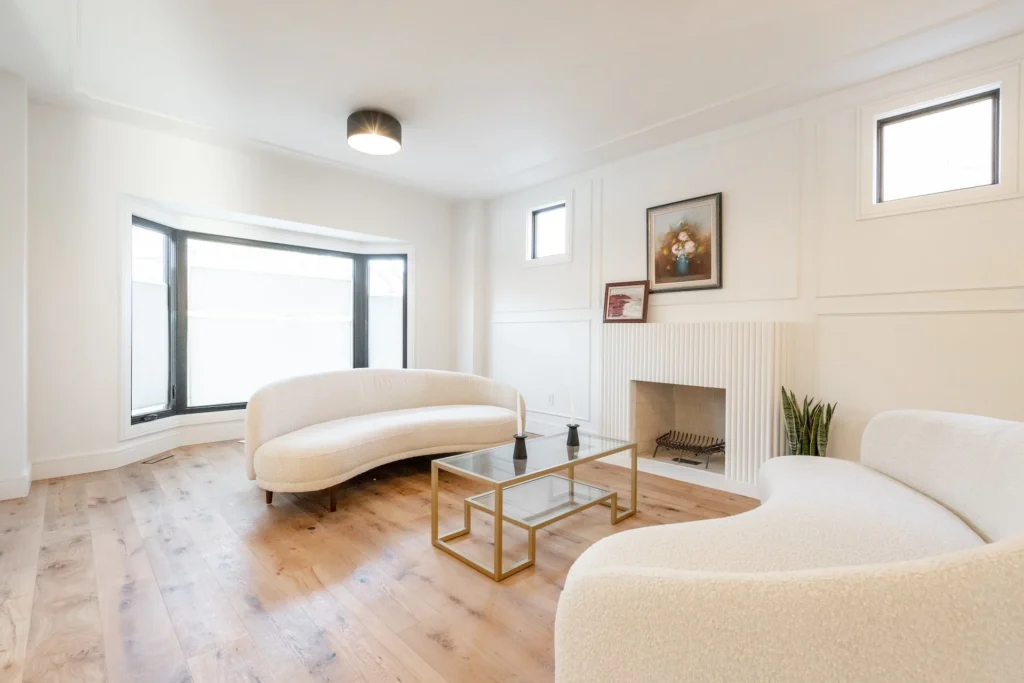
Whether you’ve just bought a dated home with great bones or you’ve outgrown the way your current house works, a full home renovation can transform how you live — without changing your address. It’s also one of the biggest investments a homeowner will make, so the question on everyone’s mind is: how much does a full home renovation cost in the GTA?
This guide lays out realistic 2026 price ranges for whole-home renovations across the Greater Toronto Area, explains what separates a $150,000 project from a $500,000 one, and helps you plan a budget that matches your goals.
Full home renovation cost in the GTA at a glance
“Full home renovation” covers a wide spectrum — from a cosmetic refresh of an already-sound home to a complete gut-and-rebuild down to the studs. Here’s how the ranges typically break down in 2026.
| Scope of renovation | Typical cost per sq ft | Typical total (2,000 sq ft home) |
|---|---|---|
| Cosmetic / light refresh | $50 – $100 | $100,000 – $200,000 |
| Mid-range full renovation | $100 – $200 | $200,000 – $400,000 |
| High-end / full gut renovation | $200 – $350+ | $400,000 – $700,000+ |
As a rule of thumb, most whole-home renovations in the GTA fall between $100 and $300 per square foot. Where you land within that range depends mostly on how deep the renovation goes — a cosmetic update that keeps existing layouts and systems sits at the low end, while a full gut that moves walls, replaces mechanicals, and installs high-end finishes sits at the top.
What drives the cost of a full home renovation?
1. Depth of the renovation
The single biggest factor is how far down you go. Painting, new flooring, and updated fixtures cost a fraction of a full gut that strips the home to its studs. Removing walls, relocating plumbing and electrical, and reconfiguring layouts all add cost — but they’re also what turn a dated house into the home you actually want.
2. Size of the home
More square footage means more of everything — flooring, drywall, paint, trim, and labour. Multi-storey homes and those with finished basements naturally cost more than a compact bungalow.
3. Kitchens and bathrooms
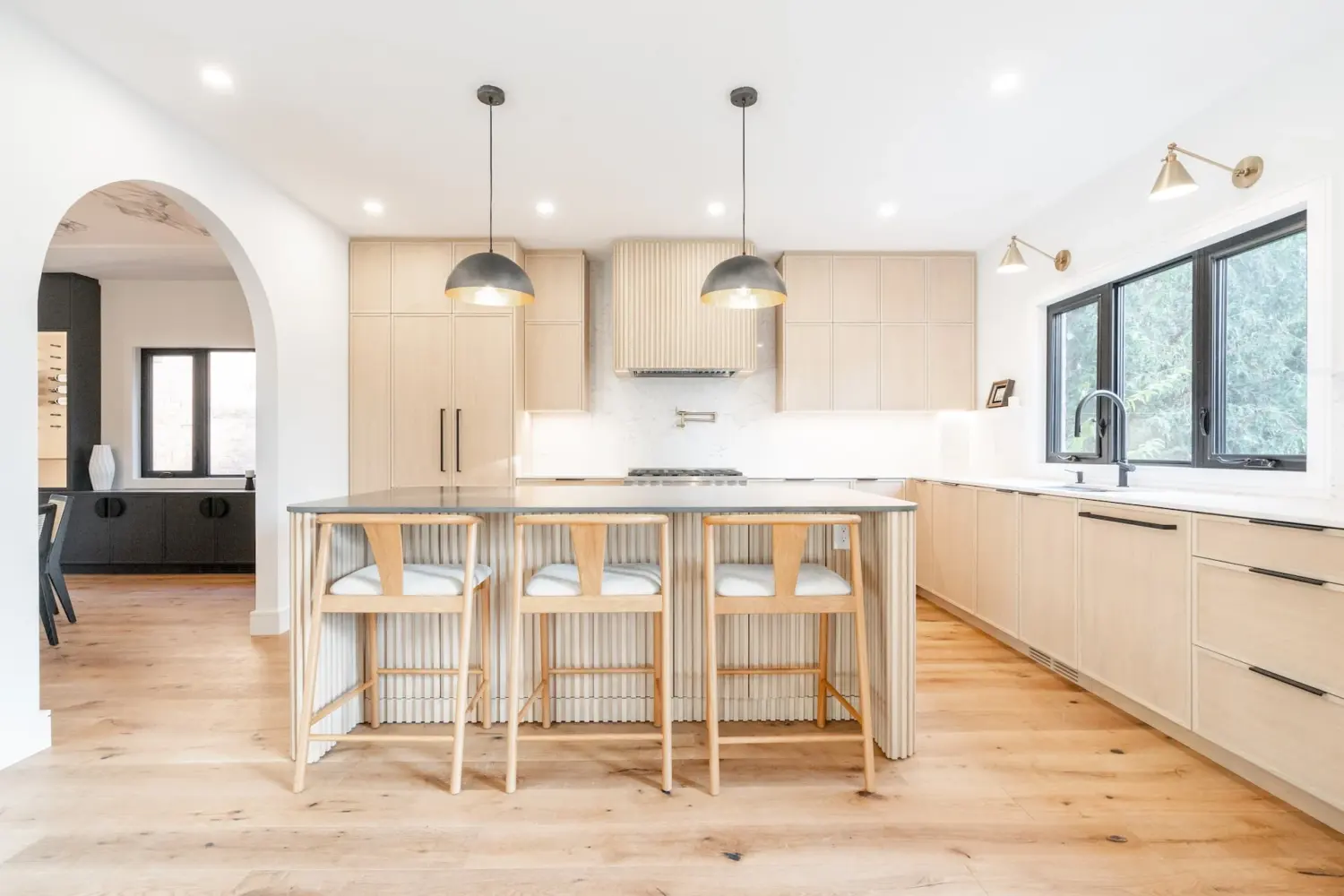
These two rooms carry the highest cost per square foot in any home because of cabinetry, countertops, plumbing, tile, and appliances. A full renovation that includes a new kitchen and multiple bathrooms will sit higher in the range than one focused on living spaces and bedrooms.
4. Structural and mechanical work
Older GTA homes frequently need updated wiring, plumbing, insulation, and sometimes structural reinforcement. Knob-and-tube wiring, galvanized pipes, and asbestos all need to be handled safely and to code. These upgrades aren’t glamorous, but they protect your investment and are often the reason a gut renovation makes more sense than a surface-level update.
5. Finishes and materials
The gap between builder-grade and luxury finishes across an entire home is significant. Flooring, cabinetry, countertops, tile, lighting, and millwork choices can swing the total budget by six figures on a large project.
6. Permits and approvals
Full renovations that alter the structure, add square footage, or change use require permits, and sometimes Committee of Adjustment approvals. Requirements and timelines vary across GTA municipalities, and we manage the entire process so it doesn’t slow your project down.
Where your renovation budget goes
It helps to understand roughly how a whole-home renovation budget is distributed. While every project is different, a typical breakdown looks something like this:
- Kitchen: often 15–20% of the total budget.
- Bathrooms: 10–15% combined, depending on how many.
- Flooring, paint, and trim throughout: 15–20%.
- Electrical, plumbing, and HVAC: 15–25%, higher in older homes.
- Structural work and drywall: 10–15%.
- Design, permits, and project management: 10–15%.
Seeing the budget this way helps you decide where to invest and where to save — and it’s exactly the kind of transparent, itemized breakdown you should expect in a professional estimate.
Cosmetic refresh vs. full gut: which do you need?
Not every home needs to be taken down to the studs. If your home’s layout works, its systems are in good shape, and you mainly want it to look and feel updated, a cosmetic renovation — new kitchen and baths, flooring, paint, lighting, and trim — can deliver a dramatic transformation for $100,000 to $200,000.
If the layout fights you every day, the wiring and plumbing are past their life, or you want to open up the main floor and reconfigure how the home lives, a full gut renovation is the better investment. It costs more, but it lets you fix everything at once, avoid renovating the same space twice, and end up with a home that’s essentially new behind the walls.
Does a full home renovation add value?
In the GTA’s market, a well-executed full renovation of a home in a desirable neighbourhood is generally a strong investment. Buyers pay a premium for move-in-ready homes with modern kitchens, updated bathrooms, open layouts, and sound mechanical systems. Beyond resale, a full renovation lets you tailor the home precisely to your family’s needs — and when you weigh it against the cost of buying a comparable renovated home (plus land transfer tax, agent fees, and moving), renovating the home you already own in the location you love often makes the most financial sense.
How to keep a full renovation on budget
- Define the scope clearly up front. The most expensive renovations are the ones where the plan keeps changing. Decide what you’re doing — and what you’re not — before work begins.
- Phase the work if needed. If your dream renovation exceeds your budget, a good contractor can help you phase it sensibly over time.
- Invest in the bones, save on the swappable. Spend on structure, systems, and layout; choose mid-range finishes you can upgrade later where it makes sense.
- Keep existing plumbing and layout where possible. Moving kitchens and bathrooms is one of the biggest cost multipliers.
- Choose a design-build team. Having one accountable team handle design, permits, and construction avoids costly miscommunication and change orders.
- Budget a 10–15% contingency. Older homes almost always reveal something behind the walls; a contingency keeps surprises from derailing the project.
How long does a full home renovation take?
A cosmetic whole-home refresh might take 2 to 4 months, while a full gut renovation of an average GTA home typically runs 4 to 8 months, and larger or luxury projects longer. Permits and design add time before construction starts. Because you often can’t live in the home during a gut renovation, timeline planning is an important part of budgeting.
Renovating an older GTA home: what to watch for
A large share of GTA homes were built decades ago, and older houses come with quirks that affect both cost and scope. Knob-and-tube wiring and undersized electrical panels often need replacing to meet today’s demands and pass inspection. Galvanized or lead plumbing may need to be swapped for modern piping. Plaster-and-lath walls, minimal insulation, and the occasional discovery of asbestos or mould all need to be handled properly and to code. None of this is cause for alarm — it’s simply the reality of updating a home with history — but it’s exactly why a thorough assessment before the project and a sensible contingency in the budget matter so much. Addressing these issues during a full renovation is far more efficient than tackling them one emergency at a time down the road, and it’s a big part of why a gut renovation, while more expensive up front, often protects your investment better over the long term.
A room-by-room look at your renovation
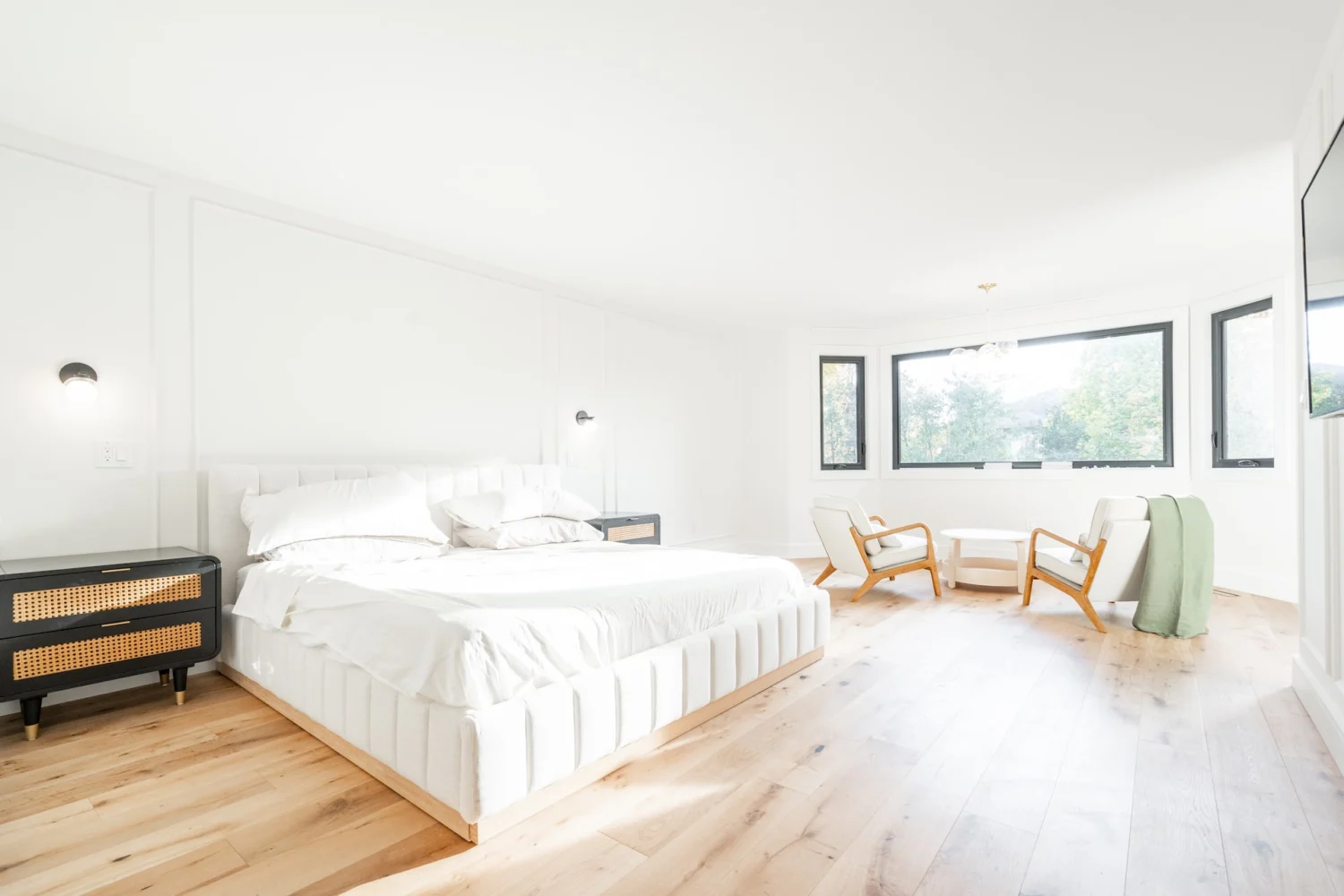
Thinking room by room helps you prioritize where your budget goes. The kitchen is usually the centrepiece and the largest single investment, thanks to cabinetry, countertops, and appliances. Bathrooms come next in cost per square foot, with tiling, waterproofing, and fixtures adding up quickly. Living and dining areas are often about opening up walls, new flooring, lighting, and millwork to create a bright, connected main floor. Bedrooms are typically more economical — flooring, paint, closets, and lighting — unless you’re adding an ensuite or walk-in closet. Basements can add significant living space and value, whether finished as family space or as a legal income suite. And don’t overlook the “invisible” work — insulation, windows, HVAC, and electrical — that makes the whole home more comfortable, quieter, and more energy-efficient for years to come.
Financing a full home renovation
Because full renovations are major investments, most homeowners finance them through home equity — a HELOC, a refinance, or a renovation-specific mortgage that lets you borrow against the home’s improved value. It’s worth confirming your financing before design begins so you can set a realistic scope from the start. A transparent, itemized estimate makes this far easier, because you can see the cost of each part of the project and make informed trade-offs rather than guessing. If your ideal renovation exceeds your current budget, a good contractor can also help you identify what to prioritize now and what can wait, so you invest in the right order.
Is your home a good renovation candidate?
Some homes are ideal candidates for a full renovation, and others need a closer look. Homes in desirable, established GTA neighbourhoods with solid foundations and good bones are excellent candidates — the location supports the investment, and the structure gives you a strong base to build on. Homes with awkward, chopped-up layouts, dated systems, or unfinished potential (like a basement that could become living space) often see the biggest transformation from a renovation. The key is an honest assessment before you begin: a good contractor will tell you where your money will have the most impact and flag anything that changes the math, so you invest with confidence rather than optimism.
Get a tailored quote for your GTA renovation
The ranges here are a solid starting point, but your home is unique — its age, size, condition, and your vision all shape the final number. At Remodel My Home, we’ve completed full home renovations across the GTA for over 12 years, managing everything from design and permits to the final walkthrough. Explore our full home renovation services, or book a free consultation for a detailed, itemized estimate.
Full home renovation cost FAQs
How much does it cost to fully renovate a house in the GTA?
Most full home renovations in the Greater Toronto Area cost between $100 and $300 per square foot, or roughly $150,000 to $400,000 for an average 2,000 sq ft home. Cosmetic refreshes cost less; high-end full gut renovations cost more.
What’s the difference between a cosmetic and a gut renovation?
A cosmetic renovation updates finishes — kitchen, baths, flooring, paint — while keeping the existing layout and systems. A gut renovation strips the home to its studs to replace wiring, plumbing, insulation, and often reconfigure the layout.
Is it cheaper to renovate or buy a new home?
In the GTA’s expensive market, renovating the home you already own often costs less than buying a comparable renovated home once you factor in land transfer tax, agent fees, and moving costs — while letting you keep your location and customize the home to your needs.
Do I need to move out during a full renovation?
For a cosmetic refresh you can often stay, but a full gut renovation usually requires you to live elsewhere for the duration. We help you plan the timeline around this.
How long does a full home renovation take?
A cosmetic refresh typically takes 2–4 months, and a full gut renovation 4–8 months, plus design and permit time before construction begins.
Do older homes cost more to renovate?
Often, yes. Older GTA homes may need electrical, plumbing, insulation, or structural upgrades that newer homes don’t, and hidden conditions behind the walls can add scope. A thorough assessment upfront and a sensible contingency keep these from becoming budget surprises.
What’s the difference between a renovation and a custom home?
A renovation works with your existing structure — updating, reconfiguring, and modernizing what’s already there. A custom home starts from the ground up. A full gut renovation sits between the two: it can feel like a brand-new home behind the walls while keeping your foundation, location, and often significant cost savings compared with a teardown and rebuild.