


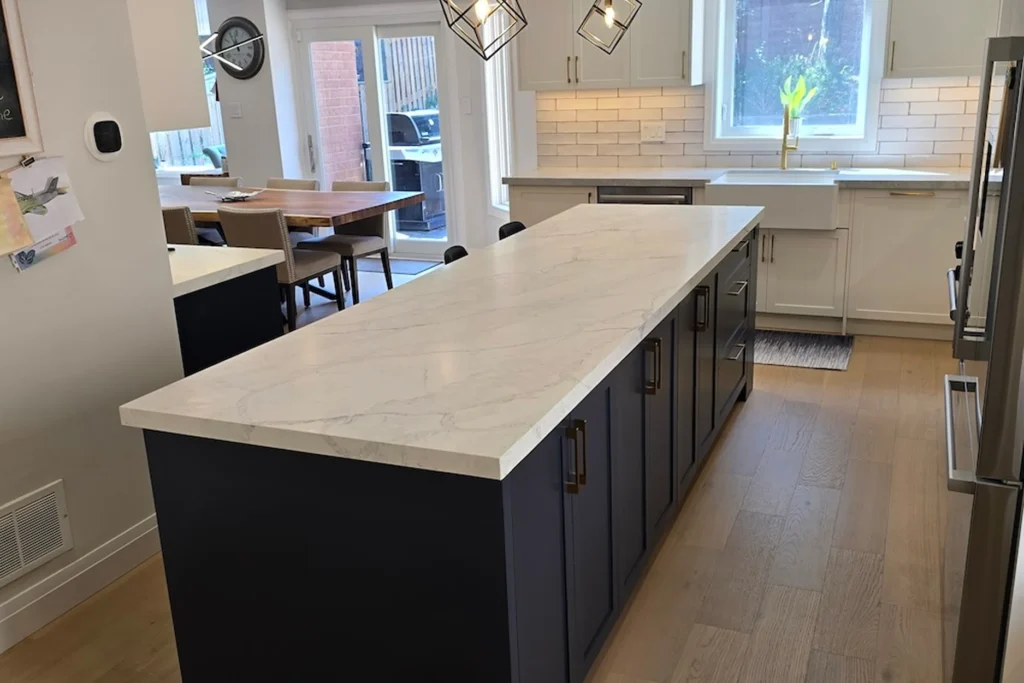
The kitchen is the heart of the home — and for most GTA homeowners, it’s the renovation that delivers the biggest impact on both daily life and resale value. But kitchens are also one of the most expensive rooms to renovate per square foot, so smart budgeting matters. So, how much does a kitchen renovation cost in the GTA?
This guide walks through realistic 2026 kitchen renovation price ranges across the Greater Toronto Area, breaks down where your money goes, and shows you how to get the kitchen you want at a price that makes sense.
Kitchen renovation cost in the GTA at a glance
Kitchen costs vary widely based on size, layout changes, cabinetry, countertops, and appliances. Here’s what GTA homeowners typically invest in 2026.
| Level of renovation | Typical GTA cost (2026) |
|---|---|
| Minor / refresh (same layout) | $15,000 – $30,000 |
| Mid-range renovation | $30,000 – $60,000 |
| High-end / luxury renovation | $60,000 – $150,000+ |
At Remodel My Home, our full-service kitchen renovations start at $29,990 — which places a complete, professionally managed kitchen renovation squarely in the range most GTA homeowners are looking for. Where your project lands depends on the size of your kitchen and the choices you make on cabinetry, countertops, and appliances.
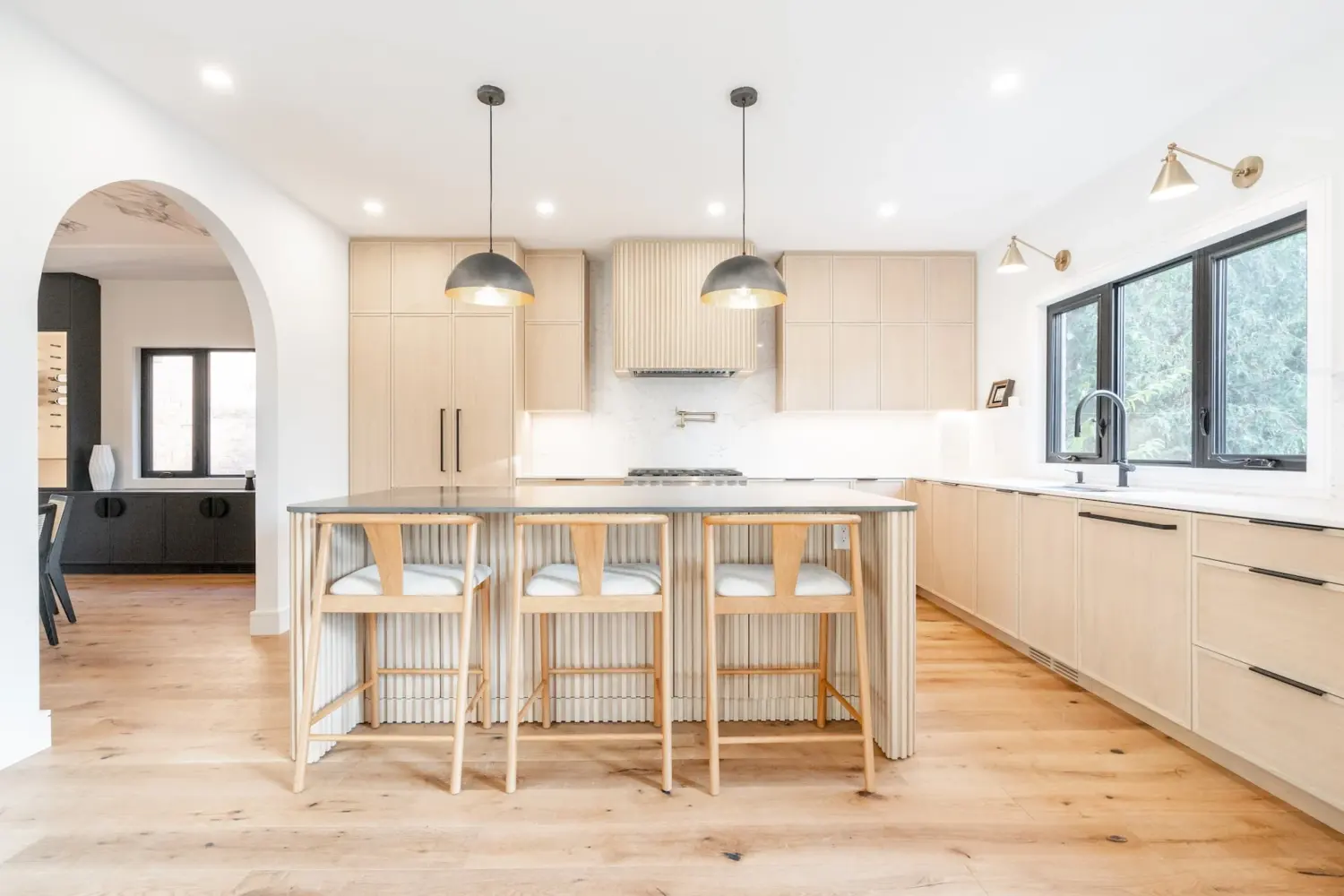
Where your kitchen budget goes
Understanding how a kitchen budget breaks down helps you decide where to invest and where to save. Here’s a typical distribution:
| Component | Share of budget | Typical cost |
|---|---|---|
| Cabinetry | 30–40% | $10,000 – $30,000+ |
| Countertops | 10–15% | $3,000 – $10,000 |
| Appliances | 10–20% | $5,000 – $20,000+ |
| Labour & installation | 20–35% | varies by scope |
| Flooring, tile & backsplash | 5–10% | $2,000 – $8,000 |
| Plumbing, electrical & lighting | 10–15% | $3,000 – $10,000 |
What drives the cost of a kitchen renovation?
1. Cabinetry
Cabinets are almost always the single largest expense in a kitchen. Stock cabinets sit at the low end, semi-custom in the middle, and fully custom cabinetry at the top. Custom lets you maximize every inch and match your exact style, which is why it’s popular in GTA homes with unique layouts.
2. Countertops
Material choice makes a big difference here. Laminate is the most affordable, quartz is the most popular mid-to-high option for its durability and look, and natural stone or premium quartz sit at the top. Countertops are a place where a modest upgrade delivers a big visual payoff.
3. Appliances
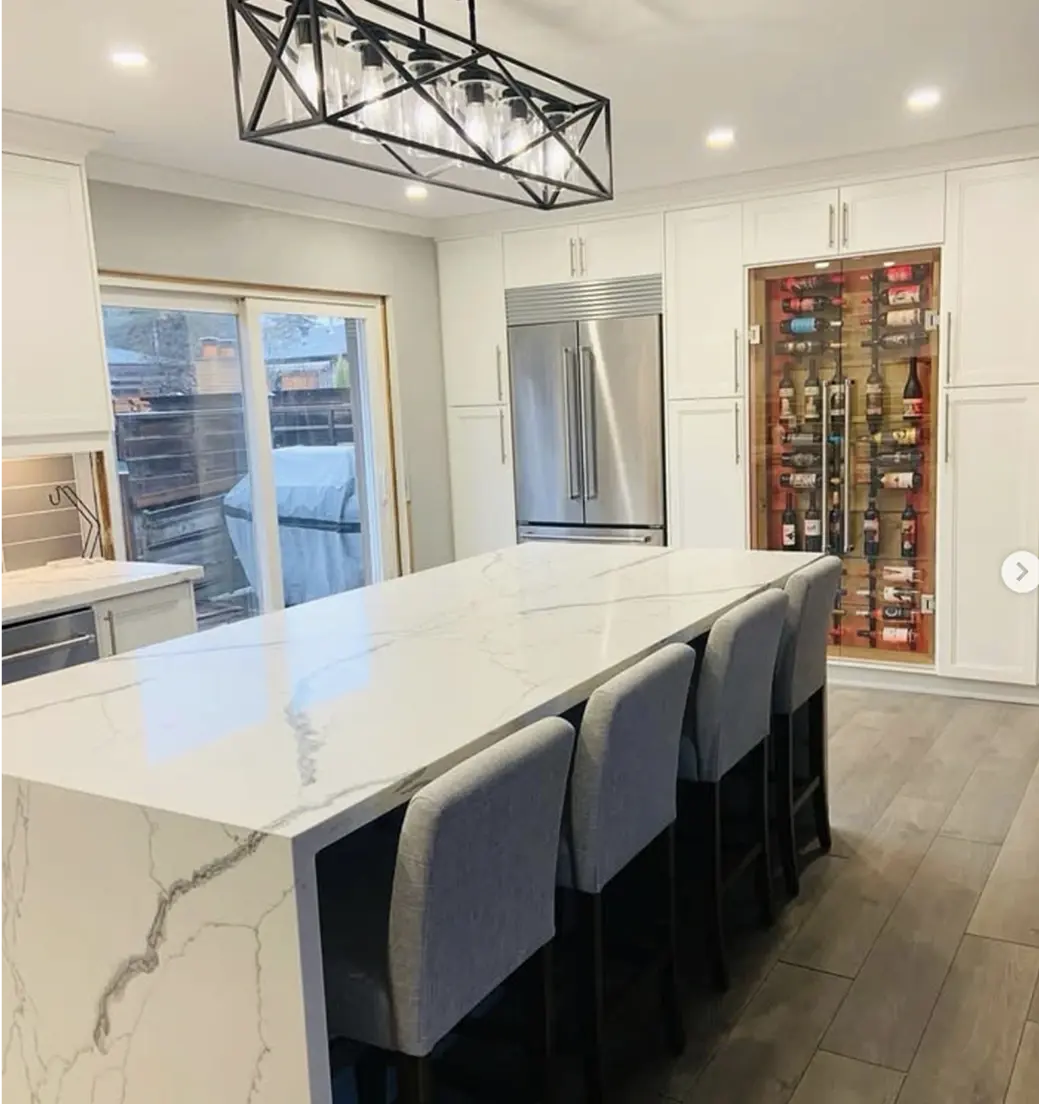
Appliance packages range enormously — from a practical builder package to high-end and professional-grade suites. Because appliances are one of the easier line items to control, they’re a good lever for keeping the overall budget in check.
4. Layout changes
Keeping your existing layout is the most cost-effective approach. Moving the sink, stove, or walls means relocating plumbing, gas, and electrical — and often opening up to the dining or living area. Open-concept conversions are popular and worth it for many families, but they do add to the cost.
5. Size of the kitchen
A larger kitchen means more cabinetry, more countertop, more flooring, and more labour. Islands, pantries, and additional cabinetry runs all add to the total.
6. Structural and hidden work
In older GTA homes, opening a wall between the kitchen and living room may reveal load-bearing structure, outdated wiring, or plumbing that needs updating. A good contractor identifies these early and prices them transparently.
Do kitchen renovations add value?
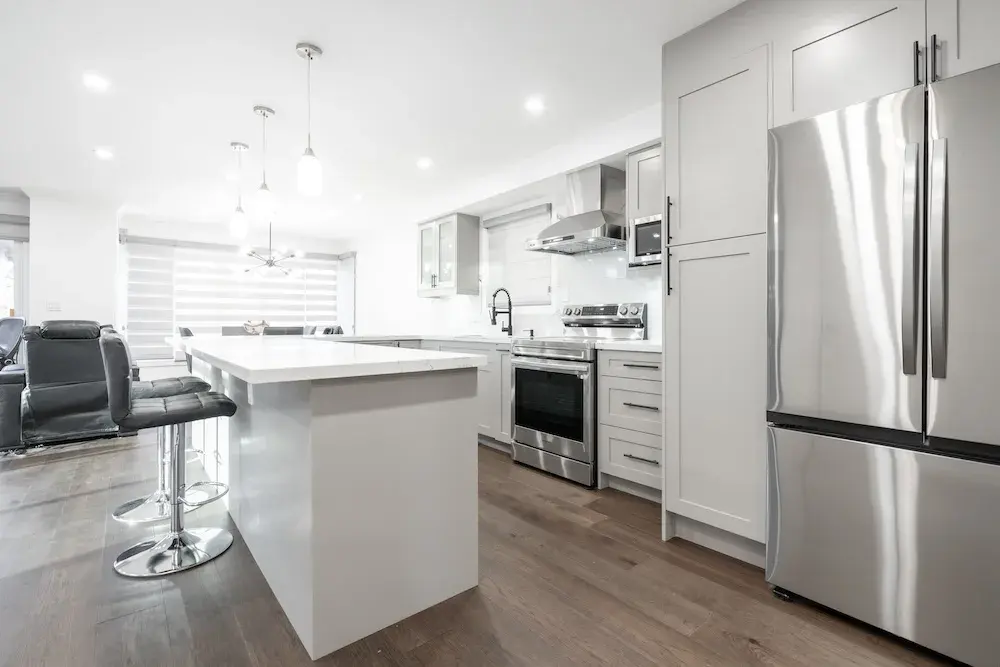
Kitchens consistently rank among the highest-return renovations for a reason: they’re the room buyers scrutinize most, and a modern, functional kitchen can make or break a sale. Beyond resale, the kitchen is where families spend a huge share of their time, so the daily quality-of-life return is enormous. A mid-range kitchen renovation that modernizes a dated space typically offers one of the best combinations of lifestyle improvement and resale value of any project in the GTA.
How to get the best value from your kitchen renovation
- Keep the layout if it works. Preserving the existing plumbing and gas locations saves thousands with little downside if the current layout is functional.
- Invest in cabinetry and counters. These are what you see and touch every day and what buyers notice first — they’re worth prioritizing.
- Be strategic with appliances. Choose the professional look where it matters and practical models where it doesn’t.
- Buy materials in bulk through your contractor. Established renovators often pass on trade discounts on materials — savings that can offset a meaningful part of the budget.
- Get a transparent, itemized quote. A clear breakdown lets you see the cost of each choice and adjust before work begins.
How long does a kitchen renovation take?
A typical GTA kitchen renovation takes about 4 to 6 weeks of construction once materials are ready, though custom cabinetry lead times and layout changes can extend that. Planning and design happen before construction begins. A clear schedule up front keeps your project — and your budget — on track.
Cabinet options explained: stock, semi-custom, and custom
Because cabinetry is the largest line item in most kitchens, understanding your options is the key to controlling the budget. Stock cabinets come in standard sizes and finishes and are the most affordable choice — a great option when your layout fits standard dimensions. Semi-custom cabinets offer more sizes, finishes, and modifications, striking a balance between cost and flexibility that suits most GTA kitchens. Fully custom cabinetry is built to your exact specifications, letting you use every inch of an awkward space, choose any finish, and add features like integrated appliance panels, deep pot drawers, and specialty storage. Custom costs the most, but in homes with unique layouts — common in older GTA houses — it often delivers the best result and the most usable storage. Cabinet construction quality also matters: solid boxes, soft-close hardware, and durable finishes hold up far better over years of daily use than bargain alternatives.
Choosing the right countertop material
Countertops are where a modest upgrade delivers an outsized visual impact. Laminate is the most budget-friendly and has come a long way in appearance. Quartz is the most popular mid-to-high choice in the GTA thanks to its durability, low maintenance, and huge range of looks, including convincing marble alternatives. Granite and other natural stones offer a distinctive, high-end look with a bit more maintenance. Premium quartz and porcelain slabs, often used for dramatic waterfall islands, sit at the top. Because your countertop is front and centre every day — and one of the first things buyers notice — it’s one of the best places to spend a little more if your budget allows.
Small kitchen vs. large kitchen costs
Kitchen size has a direct effect on cost, but not always the way you’d expect. A small galley or condo kitchen uses less cabinetry, countertop, and flooring, which lowers material costs — but tight spaces and custom sizing can raise the cost per square foot. Large kitchens with islands, extra cabinetry runs, and walk-in pantries cost more in absolute terms but can be more efficient per square foot. The layout and your material choices ultimately matter more than size alone, which is why an accurate measure and a detailed quote are the only way to know your real number.
Kitchen renovation styles popular in the GTA
Style influences both the look and the budget of your kitchen. Clean, modern designs with flat-panel cabinetry, quartz counters, and integrated appliances remain hugely popular across the GTA. Transitional kitchens — blending shaker-style cabinetry with contemporary hardware and lighting — are a timeless middle ground that suits both older homes and new builds. Two-tone cabinetry, statement islands in a contrasting colour, warm wood tones, and black hardware are all current favourites. Whatever direction you choose, the goal is a kitchen that feels current but won’t look dated in a few years — which is why classic layouts paired with quality materials tend to be the smartest long-term investment.
Signs it’s time to renovate your kitchen
Not sure whether now is the right time? A few common signs point to yes: cabinets that are falling apart or short on storage, a layout that makes cooking and gathering awkward, dated or failing appliances, worn countertops and flooring, or simply a kitchen that no longer matches how your family lives. If you’re planning to sell in the next few years, an updated kitchen is also one of the features buyers respond to most strongly. And if you’re already renovating other parts of the home, folding the kitchen in at the same time is usually more efficient and less disruptive than doing it separately later.
The kitchen renovation process, step by step
Knowing what to expect makes the whole project smoother. A professional kitchen renovation generally follows five stages. 1) Consultation and design — we discuss your goals and budget, measure the space, and develop a plan along with material and finish selections. 2) Detailed estimate — you receive a transparent, itemized quote, so there are no surprises once work begins. 3) Ordering and scheduling — cabinetry and materials are ordered (custom cabinetry carries a lead time), and we lock in your start date. 4) Construction — demolition, then any plumbing and electrical work, followed by installation of cabinetry, countertops, backsplash, flooring, and appliances. 5) Final walkthrough — we review every detail with you to make sure it’s exactly right. Clear communication at each stage is what keeps a kitchen renovation on time and on budget.
Lighting, hardware, and the details that finish a kitchen
The big-ticket items get the attention, but it’s often the details that make a kitchen feel finished and high-end. Layered lighting — recessed ceiling lights, pendants over the island, and under-cabinet lighting — transforms both the look and the function of the space. Hardware, faucets, and a well-chosen backsplash tie the design together and are relatively affordable ways to elevate the result. Thoughtful storage — deep drawers, pull-outs, a pantry, and dedicated spots for small appliances — is what makes a kitchen a pleasure to use every day. These finishing choices don’t dominate the budget, but they’re a big part of why a professionally designed kitchen feels so different from a basic builder installation.
Get a firm quote for your GTA kitchen renovation
The ranges in this guide will help you budget, but the best way to know your exact cost is a proper consultation. At Remodel My Home, our full-service kitchen renovations start at $29,990, and we handle everything — design, custom cabinetry, countertops, appliances, and installation — with transparent, itemized pricing. Explore our kitchen renovation services, or book a free consultation for a detailed estimate tailored to your kitchen.
Kitchen renovation cost FAQs
How much does a kitchen renovation cost in the GTA?
Most kitchen renovations in the Greater Toronto Area cost between $15,000 for a minor refresh and $150,000+ for a high-end custom kitchen. Full-service renovations at Remodel My Home start at $29,990, with most mid-range projects landing between $30,000 and $60,000.
What is the most expensive part of a kitchen renovation?
Cabinetry is almost always the single largest expense, typically 30–40% of the total budget, followed by countertops, appliances, and labour.
Does moving the kitchen layout cost more?
Yes. Relocating the sink, stove, or walls means moving plumbing, gas, and electrical, which adds cost. Keeping the existing layout is the most budget-friendly approach if it’s functional.
Do kitchen renovations add value to a home?
Kitchens are consistently among the highest-return renovations, both for resale value and daily quality of life. A modern, functional kitchen is one of the features buyers value most.
How long does a kitchen renovation take?
Most GTA kitchen renovations take about 4 to 6 weeks of construction, plus design and material lead times beforehand.
How much do kitchen cabinets cost in the GTA?
Kitchen cabinetry typically ranges from about $10,000 for stock cabinets in a smaller kitchen to $30,000 or more for fully custom cabinetry in a larger space. Cabinets usually represent 30–40% of the total kitchen budget, making them the single largest line item.
Can I renovate my kitchen without changing the layout?
Absolutely, and it’s the most cost-effective approach. Keeping your existing plumbing, gas, and electrical locations while updating cabinetry, countertops, appliances, and finishes delivers a dramatic transformation at a lower cost than a full layout change.
Are kitchen renovations worth the investment?
For most GTA homeowners, yes. A modern, functional kitchen improves daily life every single day and is one of the features buyers value most, which makes it consistently one of the highest-return renovations — both in enjoyment and in resale value.