


If you own a Toronto condo right now, you already know the story: units are taking longer to sell, prices have softened, and the offers coming in aren’t the ones owners were hoping for a few years ago. Toronto Regional Real Estate Board data showed condo sales down roughly 15% year-over-year at the end of 2025, with average prices slipping to the low $650,000s — and as BNN Bloomberg reported this spring, a growing number of GTA condo owners are responding the same way: instead of selling into a soft market, they’re renovating.
It’s a rational move. If your condo no longer fits your life but selling means leaving money on the table, upgrading the unit you already own lets you enjoy it now and sell into a better market later — with a renovated, more valuable unit when you do. Here’s how to think it through, and what renovating a Toronto condo actually involves.
Why renovating beats selling for many condo owners right now
1. You keep your equity working
Selling in a down market locks in today’s price. A well-planned renovation costs a fraction of the loss many owners would absorb by selling low and buying elsewhere, and the improvements carry value forward to a future sale.
2. Your carrying costs don’t change — your enjoyment does
Your mortgage, maintenance fees and taxes stay the same whether your kitchen is dated or beautiful. Renovating converts money you’d spend on transaction costs — commissions, land transfer tax (double in Toronto), moving, legal fees — into something you live in every day.
3. Renovated units stand out when you do sell
In a market with lots of listings, dated units sit. A modern kitchen, refreshed bathroom and updated flooring are exactly what makes buyers stop scrolling — and they’re the improvements that help a unit sell faster and closer to asking when the time comes.

What you can (and can’t) renovate in a Toronto condo
Condo renovations are different from house renovations, and knowing the boundaries up front saves months. In general:
What you can change
- Kitchen — cabinetry, countertops, backsplash, appliances, lighting, and often the layout within your unit
- Bathrooms — vanities, tile, showers, tubs and fixtures
- Flooring — almost always replaceable, subject to your building’s soundproofing (acoustic underlay) requirements
- Interior walls — many non-loadbearing partition walls can be removed or moved to open up the space
- Storage & built-ins — custom closets, wall units and murphy beds that make small spaces live large
- Lighting & electrical — pot lights, under-cabinet lighting and updated panels within your unit
What you generally can’t
- Windows and exterior doors — usually common elements owned by the corporation
- Plumbing stacks and risers — you can move fixtures within reason, but the building’s vertical plumbing stays put
- Balconies — typically exclusive-use common elements with strict rules
- Anything structural or shared — concrete slabs, demising walls and building systems
The approval process: what your board will ask for
Almost every Toronto condo requires board approval before renovation work starts. Expect to provide a scope of work, contractor insurance certificates and sometimes drawings; many corporations use a Section 98 agreement for alterations that touch common elements. Buildings also set working hours (typically weekdays, roughly 9 to 5), require elevator bookings for materials, and expect floor protection in corridors. It sounds like a lot — but a contractor who renovates condos regularly handles this paperwork routinely. We prepare the package, coordinate with property management, and keep the neighbours’ goodwill intact.
The upgrades condo owners are choosing in 2026
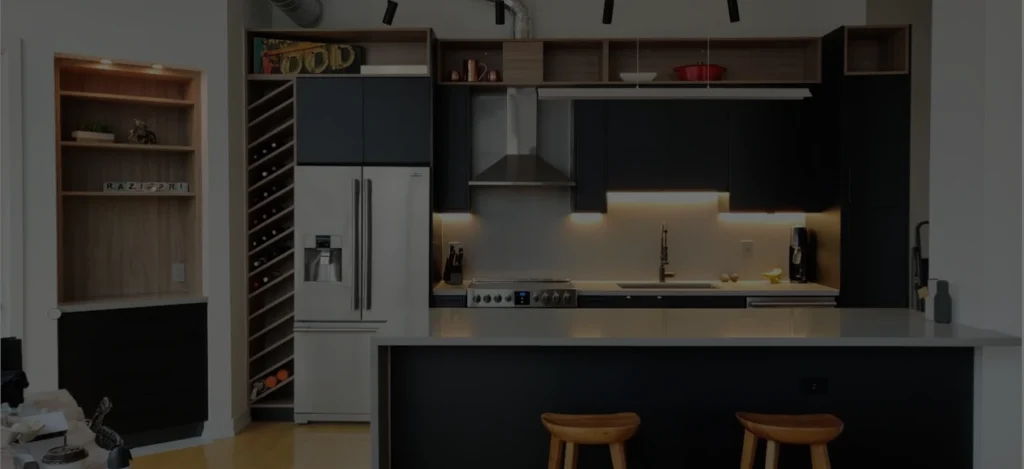
Kitchen transformations lead the list: replacing builder-grade cabinetry with custom full-height storage, quartz counters, panel-ready appliances and proper task lighting. In older units, removing a kitchen partition wall creates the open-concept layout buyers expect.
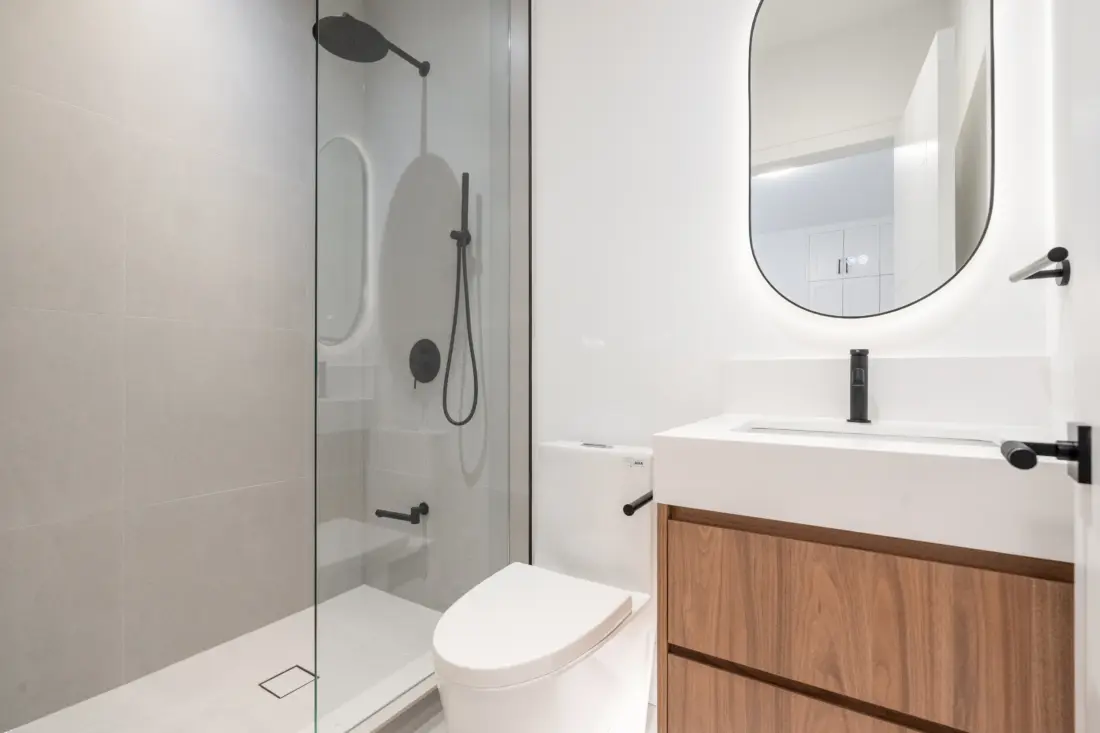
Bathroom upgrades come next — walk-in glass showers replacing seldom-used tubs, floating vanities, and modern tile. If your building was built between the mid-1990s and 2007, ask about Kitec plumbing: many towers of that era used it, and replacing it while your bathroom or kitchen walls are already open is dramatically cheaper than doing it as a standalone project later.
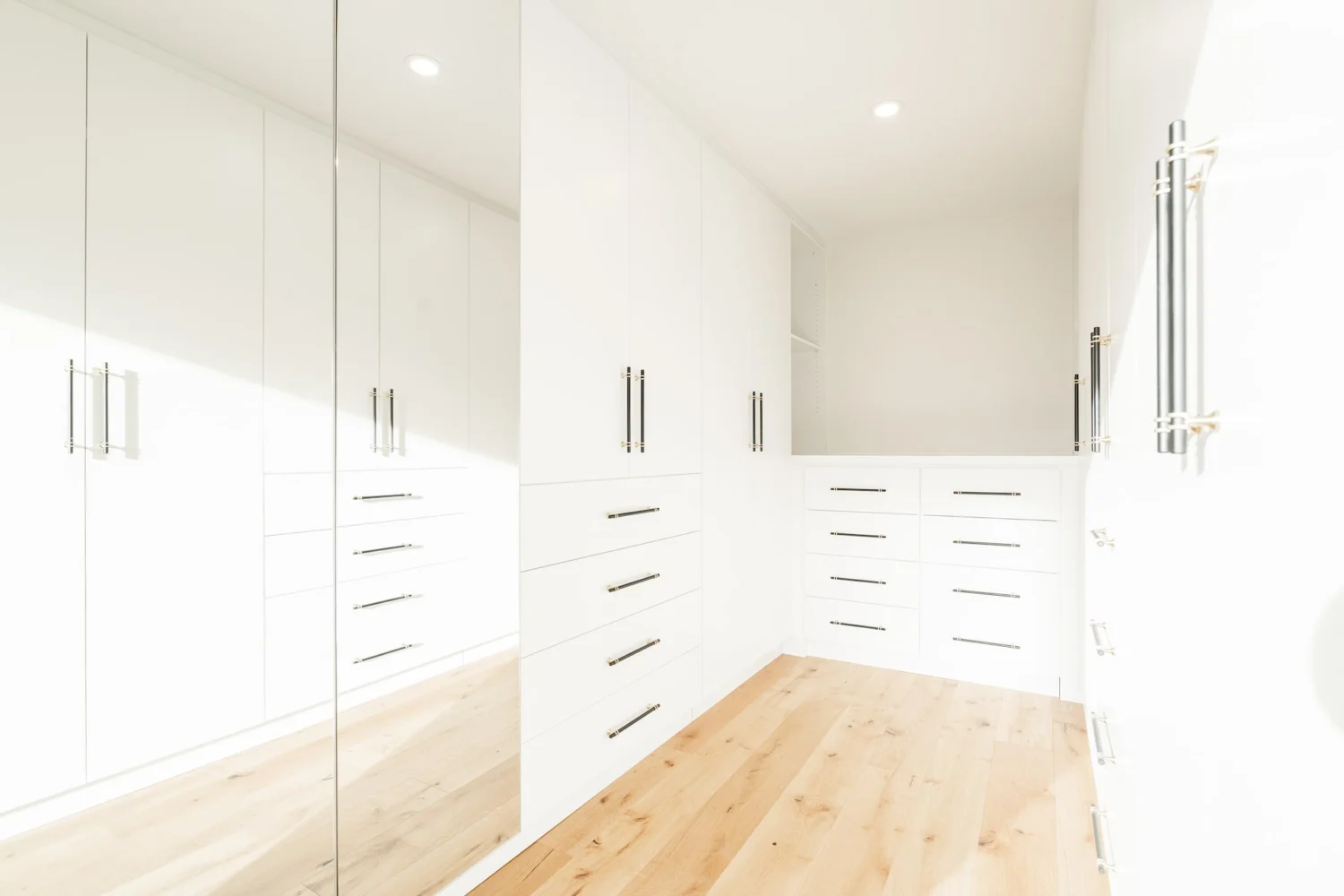
Storage engineering is the quiet winner. Custom closets, floor-to-ceiling built-ins and smart entryway systems solve the #1 condo complaint — not enough space — without adding a single square foot.
Flooring and lighting finish the transformation: wide-plank flooring on acoustic underlay, pot lights where the ceiling allows, and warm layered lighting instead of a single builder dome per room.
What does a condo renovation cost?
As a rough 2026 guide for Toronto: a focused refresh (flooring, paint, lighting, hardware) often lands in the $20,000–$40,000 range; a full renovation with a new kitchen and bathroom typically runs $40,000–$75,000; and high-end, full-gut transformations of larger units can reach $100,000 or more. Every building and unit is different — we’ll publish a complete Toronto condo renovation cost breakdown next week, and in the meantime our condo renovation service page covers what’s included in our transparent, itemized quotes.
How long does it take?
Most full condo renovations take 4 to 8 weeks of construction once board approval is in place and materials are ordered. Board approval itself typically takes 2 to 6 weeks depending on the corporation, which is why we start the paperwork while design and ordering are underway. The result: less time between “let’s do this” and living in a transformed unit.
The real math: what selling actually costs
Owners often compare a renovation quote against zero, but the honest comparison is against the true cost of selling and buying again. On a $650,000 Toronto condo, a 5% commission is $32,500 before HST. Buying a $900,000 replacement inside Toronto triggers both the provincial and municipal land transfer taxes — roughly $29,000 combined for a non-first-time buyer. Add legal fees on both transactions, moving costs, and the small fortune that goes into blinds, light fixtures and the dozen fixes every “new” place needs, and the transaction alone can approach $70,000–$80,000 — money that buys a complete, beautiful renovation of the unit you already own, with nothing lost to fees.
And that’s before the market question: selling a dated unit into a soft market means accepting a discount on the way out, while the renovated units around you set the comparables. Flipping that equation — being the renovated unit when activity returns — is exactly why so many owners are choosing to wait it out in a better version of their own home.
Can you live in your condo during the renovation?
Usually, partially. A bathroom-only or kitchen-only renovation is very livable with some planning (we set up temporary kitchen arrangements, and sequence work so you’re never without a working bathroom overnight where the unit has two). For full-unit renovations, many owners plan a short stay elsewhere during the noisiest two to three weeks of demolition and flooring, then move back for the finishing stretch. Because condo working hours are limited to weekdays, the work rhythm is predictable — you’ll know exactly which days matter. We plan this with you up front so there are no surprises, and our crews leave the unit broom-clean and the corridor spotless every single day; in a shared building, that courtesy is non-negotiable.
What about renting it out instead?
Some owners consider a third path: keep the condo as a rental and buy elsewhere. It can work — but a dated unit rents below its potential too, and first impressions drive rental pricing the same way they drive sale pricing. If your plan is to hold and rent, a focused refresh (flooring, paint, lighting, hardware and a bathroom update) is often the highest-ROI version of a renovation: durable, attractive, and priced for tenants rather than for your own long-term enjoyment. It’s a different scope than an owner-occupant renovation, and we’ll tell you honestly which investments make sense for a rental and which don’t.
Renovate-or-sell: a quick decision framework
- Renovating likely wins if: your location works, your building is well-run, the unit’s layout has potential, and what frustrates you is the kitchen, bathroom, storage or finishes.
- Selling may still make sense if: you need bedrooms the unit simply doesn’t have, the building has major issues (special assessments, chronic problems), or a life change is moving you out of the city anyway.
- The middle path: renovate now for your own enjoyment, and let the improved unit be your head start when the market recovers.
Questions to ask before you decide
A few honest questions cut through the noise. What would my unit actually list for today, dated as it is — and what would I net after commissions and taxes? What would the home I’d buy instead cost, all-in? Does my frustration live in the finishes (fixable) or in the floor plan and building (mostly not)? Is my building financially healthy, with a solid reserve fund? And the five-year question: where do I want to be living in 2031 — because if the answer is “probably right here, or selling into a better market,” the renovation pays you twice: once in daily enjoyment, once at sale. If you’re unsure on any of these, bring them to a consultation — we’ll give you a straight read, including when we think renovating isn’t the right call.
Thinking about it? Start with a free consultation
We’ve renovated condos across Toronto and the GTA for over 12 years — navigating board approvals, elevator bookings and quiet hours while delivering kitchens, bathrooms and full-unit transformations our clients love coming home to. Book a free consultation and we’ll give you a detailed, itemized estimate for your unit — and honest advice on whether renovating makes sense for your situation.
FAQs: renovating instead of selling
Is it worth renovating a condo I plan to sell eventually?
Usually, yes. Kitchens, bathrooms and flooring are the upgrades buyers respond to most, and a renovated unit stands out in a crowded market. You also get to enjoy the improvements in the meantime — a return no listing can offer.
Do I need my condo board’s permission to renovate?
Almost always, yes. Most Toronto corporations require an application with your scope of work and contractor insurance, and may use a Section 98 agreement for certain alterations. We handle this process for our clients.
Can I remove a wall in my condo?
Often, yes — many interior partition walls are non-structural. We verify with drawings and, where needed, an engineer’s review before any demolition, and include this in the board application.
What is Kitec plumbing and should I worry?
Kitec is a plumbing material used in many condos built from the mid-1990s to 2007 that is prone to failure and can affect insurance and resale. If your building has it, replacing it during a renovation — while walls are already open — is far more economical than a standalone replacement.
How disruptive is a condo renovation to neighbours?
With proper planning, minimal. We follow building working hours, book elevators, protect corridors and keep property management informed — it’s a core part of how we run condo projects.
Which renovations add the most value to a Toronto condo?
Kitchens first, bathrooms second, then flooring and lighting throughout. Custom storage punches above its cost in smaller units. Highly personal choices (bold tile, unusual layouts) add enjoyment but less resale value, so weight them by how long you plan to stay.
Should I wait for the market to recover before renovating?
Waiting means living in the dated unit meanwhile and competing with renovated listings when you eventually sell. Renovating now means enjoying the space through the wait, with contractor availability and scheduling generally better in a slower market. For most owners planning to stay two or more years, sooner wins.
Do older condo buildings renovate well?
Often best of all. Units from the 1980s and 1990s typically offer larger floor plans, real bedrooms and more storage than new builds — solid bones that reward modern finishes. The renovation checklist just gets two additions in older towers: confirming what’s behind the walls and, in mid-90s to 2007 buildings, checking for Kitec plumbing.