


Condo renovation quotes in Toronto can feel all over the map — one contractor says $30,000, another says $80,000 for what sounds like the same job. The truth is that condo renovations have their own cost drivers, from board requirements to building logistics, and understanding them is the key to budgeting with confidence. So, how much does a condo renovation cost in Toronto in 2026?
This guide breaks down realistic price ranges by scope and by room, explains what makes condo work different from house work, and shows you where the money actually goes — so you can plan your renovation with real numbers instead of guesses. Prices shift with material markets and the season, so treat every range here as a 2026 snapshot and your itemized quote as the number that counts.
Toronto condo renovation costs at a glance
| Scope | Typical Toronto cost (2026) |
|---|---|
| Refresh (flooring, paint, lighting, hardware) | $20,000 – $40,000 |
| Mid-range renovation (kitchen + bathroom + flooring) | $40,000 – $75,000 |
| Full gut renovation (larger or high-end units) | $75,000 – $150,000+ |
On a per-square-foot basis, most full Toronto condo renovations land between $75 and $200 per square foot depending on finishes and how much of the unit is touched. A 650 sq ft one-bedroom getting a complete mid-range renovation typically falls in the $50,000–$70,000 range; larger two-bedroom units scale up from there.
Cost by room
Condo kitchen: $25,000 – $60,000
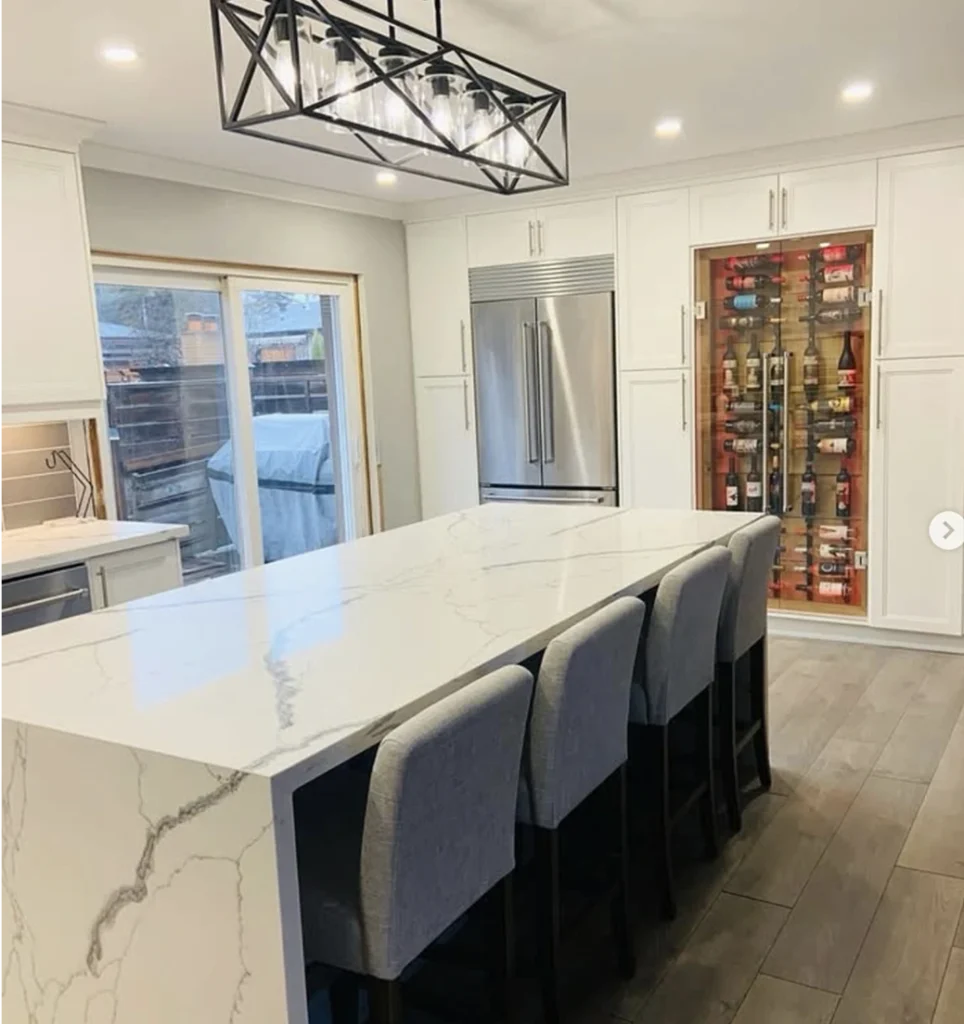
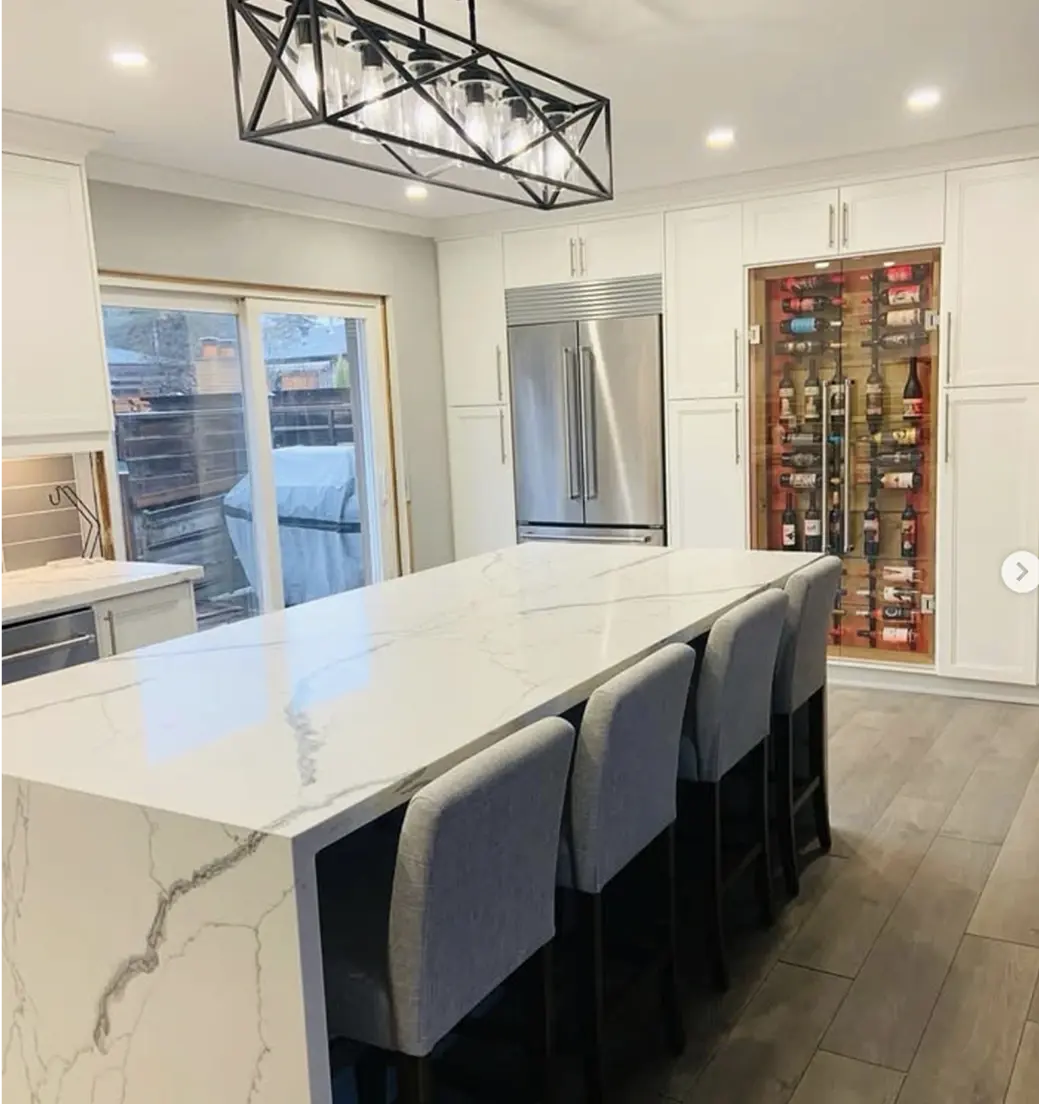
Cabinetry, countertops, appliances and installation dominate. Condo kitchens are smaller than house kitchens, but they demand more custom problem-solving per foot — full-height storage, panel-ready appliances, and clever corner solutions that make a compact footprint work hard. Opening the kitchen to the living space (where walls allow) adds demolition, electrical and finishing costs but transforms the whole unit.
Condo bathroom: $15,000 – $30,000 each
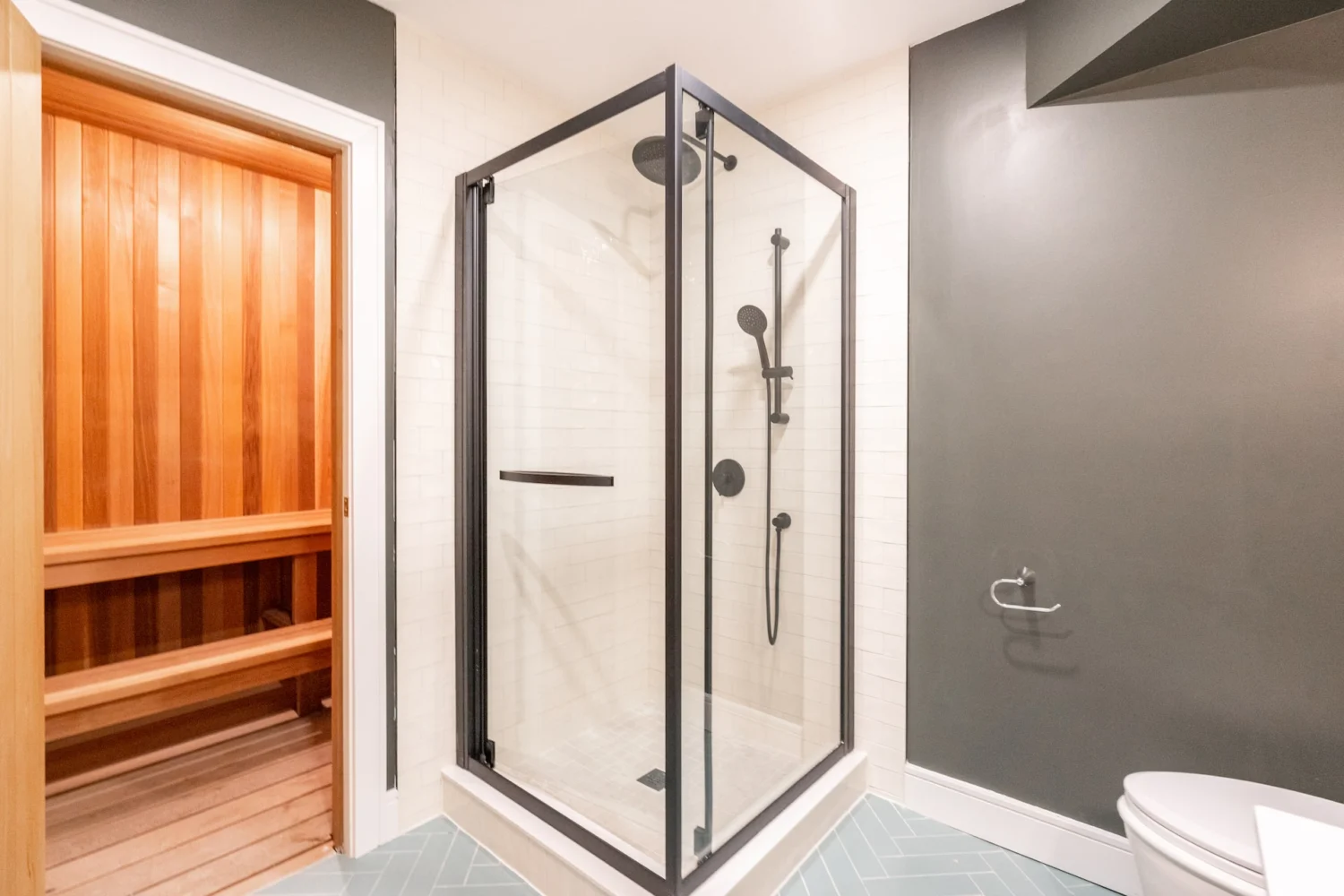
Waterproofing, tile and glass drive bathroom costs. Converting a rarely-used tub to a walk-in glass shower is the most requested upgrade; keeping fixtures near their existing locations keeps plumbing costs in check, since the building’s stacks can’t move.
Flooring throughout: $10,000 – $20,000
Quality engineered flooring installed over the acoustic underlay your building requires typically runs $12–$20 per square foot installed in condo conditions. It’s the upgrade that changes the feel of every single room.
Storage & built-ins: $3,000 – $15,000
Custom closets, wall units and entryway systems — the difference between a condo that feels tight and one that feels effortless.
What makes condo renovations different (and affects cost)
- Board approval & paperwork. Applications, insurance certificates and sometimes Section 98 agreements come before any work. Budget time more than money — approvals typically take 2–6 weeks.
- Building logistics. Elevator bookings, loading dock windows, corridor protection and strict working hours (usually weekday business hours) mean condo projects need tighter scheduling than house projects — and crews who respect the building.
- No moving the stacks. Plumbing fixtures can shift within reason, but the building’s risers are fixed. Layouts that work with the stacks save thousands versus fighting them.
- Soundproofing rules. Most corporations require acoustic underlay under new flooring — a real line item, and a non-negotiable one.
- Kitec plumbing. If your building went up between the mid-1990s and 2007, it may have Kitec supply plumbing. Replacing it during a renovation typically adds $5,000–$12,000 — and is far cheaper than a standalone replacement after your new kitchen is closed up. We check for it during every consultation in buildings of that era.
- Disposal & delivery. Everything in and out goes through the elevator — demolition and material handling simply take longer than in a house, and quotes reflect it.
Where your budget goes
| Component | Share of a full condo reno |
|---|---|
| Kitchen (cabinetry, counters, appliances) | 30–40% |
| Bathroom(s) | 20–30% |
| Flooring & paint | 15–20% |
| Electrical & lighting | 5–10% |
| Built-ins & storage | 5–10% |
| Labour, management & logistics | balance |
Cost by unit type
| Unit type | Refresh | Full renovation |
|---|---|---|
| Studio / Jr. one-bedroom (~450–550 sq ft) | $15,000 – $28,000 | $35,000 – $55,000 |
| One-bedroom (~550–700 sq ft) | $20,000 – $35,000 | $45,000 – $70,000 |
| Two-bedroom (~750–1,000 sq ft) | $28,000 – $45,000 | $60,000 – $100,000 |
| Large / luxury unit (1,000+ sq ft) | $40,000+ | $90,000 – $150,000+ |
Older buildings often reward renovation most: units from the 1980s and 1990s tend to have larger floor plans than new builds, and a full renovation of a spacious older unit frequently costs less than the price premium of a comparable new-build condo — while ending up nicer.
How to read a condo renovation quote
Quotes vary wildly in what they include, which is why comparing bottom-line numbers alone misleads. A proper condo quote should itemize: demolition and disposal (including elevator/logistics time), cabinetry and countertops with brand and spec, appliances (or an allowance), plumbing and electrical work, tile and flooring with acoustic underlay, painting, and project management — plus who handles the board application and insurance certificates. If a quote is thousands lower than the others, the difference is almost always something missing from this list, not efficiency. Insist on itemized quotes and the mystery disappears.
Common cost surprises (and how we prevent them)
- What’s inside the walls. Older towers can hide dated wiring or, in mid-90s–2007 buildings, Kitec plumbing. We scope this in the consultation, not mid-project.
- Slab ceilings. Concrete ceilings limit pot-light placement; solutions (surface-mounted profiles, bulkhead lighting) are designed up front rather than improvised.
- Board conditions. Some corporations require engineer sign-offs for wall removals or specific insurance riders — we build these into the plan and schedule from day one.
- Material lead times. Custom cabinetry runs 6–10 weeks; ordering before demolition (not after) keeps the site moving.
How to get the best value from a condo renovation
- Work with the stacks, not against them. Keeping wet areas near existing plumbing saves real money with little design sacrifice.
- Invest in the kitchen and storage. They deliver the biggest daily-life and resale impact per dollar in a condo.
- Bundle the work. One mobilization, one elevator schedule, one approval — renovating the kitchen, bathroom and flooring together costs meaningfully less than doing them one at a time over several years.
- Address Kitec while walls are open. If your building has it, this is the moment.
- Choose a condo-experienced contractor. Board packages, insurance requirements and building relationships aren’t extras — they’re the difference between a smooth project and a stalled one.
Board approval: the costs and timeline nobody quotes
Board approval itself is usually inexpensive — some corporations charge a modest review or security deposit, refundable if corridors and elevators come through unscathed — but it shapes the whole project. Expect to submit a scope of work, your contractor’s certificate of insurance (corporations typically require $2M–$5M liability naming the corporation), WSIB clearance, and drawings for anything touching walls or plumbing. Section 98 agreements, used when alterations affect common elements, can add legal-review time. The practical numbers: 2–6 weeks for approval in most buildings, faster where management is responsive and the package is complete on the first submission — which is precisely the part an experienced condo contractor controls. We’ve been through this process with dozens of corporations, and a clean first-time package is the single best schedule-saver in condo work.
Where to spend and where to save in a condo
Spend on: cabinetry (it’s the furniture of the room and works hard in a small space), countertop material (a compact kitchen means upgrading to premium quartz costs far less than it would in a house), the shower (waterproofing and glass done right last decades), and storage engineering everywhere.
Save on: appliance badges (mid-tier packages perform beautifully in condo-scale kitchens), tile drama (one feature moment beats four), and moving plumbing you don’t need to move. A $60,000 condo renovation that respects the stacks routinely looks and lives better than an $80,000 one that fought the building.
Renovating to live in vs. renovating to rent
The right spec differs. An owner-occupant renovation optimizes for daily joy: custom storage, premium counters, the beautiful shower. A rental-unit renovation optimizes for durability per dollar: quality laminate over hardwood, quartz over marble-look porcelain slabs, robust mid-range fixtures, and a neutral palette that photographs well. Both are legitimate; mixing them up is how budgets go wrong. Tell us which one you’re building for and we’ll spec accordingly — and if the answer is “live in it now, maybe rent it later,” we’ll bias to the durable end of owner-grade.
Timeline: what to expect
A typical full condo renovation runs 4 to 8 weeks of construction, preceded by 2–6 weeks of board approval and material lead times (custom cabinetry is usually the long pole). We sequence approvals, ordering and scheduling in parallel so your project starts as soon as the building allows — and we recently covered why so many Toronto owners are renovating rather than selling in this market.
Is renovating your condo worth it in 2026?
For most owners, yes — and this year makes an unusually strong case. With the resale market soft, many owners can’t sell at the price they want anyway; renovating converts that waiting period into years of living in a better home. Renovated units consistently show better and sell faster when listings compete, and the upgrades that cost $50,000–$70,000 today are exactly the ones buyers will shortlist for later. Meanwhile, contractor scheduling is more flexible in a slower market than it was in the frenzied years, which shows up in both timelines and pricing. The one discipline that matters: spend where condo value actually lives — kitchen, bathrooms, flooring, storage — and resist over-personalizing if a future sale is part of the plan. Renovate for the unit you have, in the building you trust, at the standard your street of comparables rewards, and the investment holds.
Get an exact number for your unit
Ranges are for planning — your quote should be exact. We’ve renovated condos across Toronto and the GTA for over 12 years, and every estimate we provide is itemized line by line: cabinetry, counters, labour, materials, approvals. Book a free consultation or explore our condo renovation services to see what’s included.
Condo renovation cost FAQs
How much does it cost to renovate a 600 sq ft condo in Toronto?
A complete mid-range renovation of a one-bedroom unit around 600–700 sq ft typically costs $45,000–$70,000 including a new kitchen, bathroom and flooring. A lighter refresh can be done for $20,000–$35,000.
What’s the most expensive part of a condo renovation?
The kitchen — typically 30–40% of the total budget — followed by bathrooms. Cabinetry and countertops are the biggest individual line items.
Do condo renovations cost more per square foot than house renovations?
Often, yes. Building logistics (elevators, working hours, protection), acoustic requirements and more custom-fitted work in compact spaces add cost per foot — though smaller total areas usually mean a lower overall budget than a house.
Do I need permits for a condo renovation?
Board approval is almost always required; municipal permits apply to certain work such as moving walls, electrical panel changes or plumbing alterations. We determine what your specific scope needs and handle both processes.
How can I keep my condo renovation on budget?
Keep plumbing near the stacks, bundle all the work into one project, decide finishes before construction starts, and insist on an itemized quote so every dollar has a name attached.
How long does condo board approval take?
Typically 2 to 6 weeks depending on the corporation and how complete the application package is. A clean first submission — scope, insurance certificates, WSIB clearance and drawings together — is the biggest time-saver, and we prepare it as standard.
Can I renovate a condo I just bought before moving in?
Yes, and it’s the ideal window: an empty unit renovates faster and cheaper than a furnished one. Start the board application as soon as you have keys (some corporations accept applications between firm deal and closing), order long-lead materials early, and you can often move straight into a finished home.
Do renovations affect my condo insurance?
Tell your insurer about significant upgrades so your unit-improvements coverage reflects the new value — betterments beyond the builder-standard unit are typically the owner’s to insure, not the corporation’s. Your contractor’s liability insurance covers the construction period itself.
What’s the cheapest way to make a big impact in a condo?
Flooring, paint and lighting. Replacing dated flooring throughout, repainting in a modern neutral and swapping builder dome lights for pot lights and considered fixtures transforms the feel of a unit for a fraction of a full renovation — and every one of those investments carries forward if you renovate further later.